
It’s important to eat the right balance of fats. Focus on heart-healthy unsaturated fats like olive and rapeseed oil, and reduce saturated fats found in red and processed meats, full-fat dairy, fast food, and snacks.

Aim for at least five servings a day. Vegetables and fruit are packed with nutrients: vitamins, minerals, and fibre which can help lower cholesterol. The key is variety – any veg or fruit counts – canned, frozen, fresh, dried!

Carbs aren’t the enemy when it comes to heart health – it’s all about the type of carb you choose. Include healthy carbs like wholegrains. Swap refined carbs, like white bread and pasta, for healthier options like wholemeal bread, wholegrain pasta, porridge, brown rice, and quinoa.

Not all proteins are created equal. Choose more plant proteins, which are lower in saturated fat and contain the fibre we often lack in our diets. Beans, nuts, and seeds are great sources. It’s not about cutting out meat but about eating more plant proteins.

Oily fish like salmon, sardines, pilchards and mackerel are rich in omega-3 fats, which are great for heart health.

Switching to lower-fat dairy options, or fortified plant-based alternatives, can help reduce cholesterol-raising saturated fats.

Too much salt can raise blood pressure, a key risk factor for heart disease and strokes. Most salt comes from pre-packed and take-away foods. Check food labels and compare products to help reduce your salt intake.

Reducing your sugar intake, from sugary foods and drinks, can support heart health and overall wellbeing.

We should be drinking around 6-8 glasses of fluids daily. This can be water, tea or coffee without added sugar, and sugar free drinks.

Some everyday foods are particularly effective at lowering cholesterol, including nuts, beans, oats, barley, and foods fortified with plant sterols and stanols. Incorporate more of these into your diet to help manage cholesterol levels.

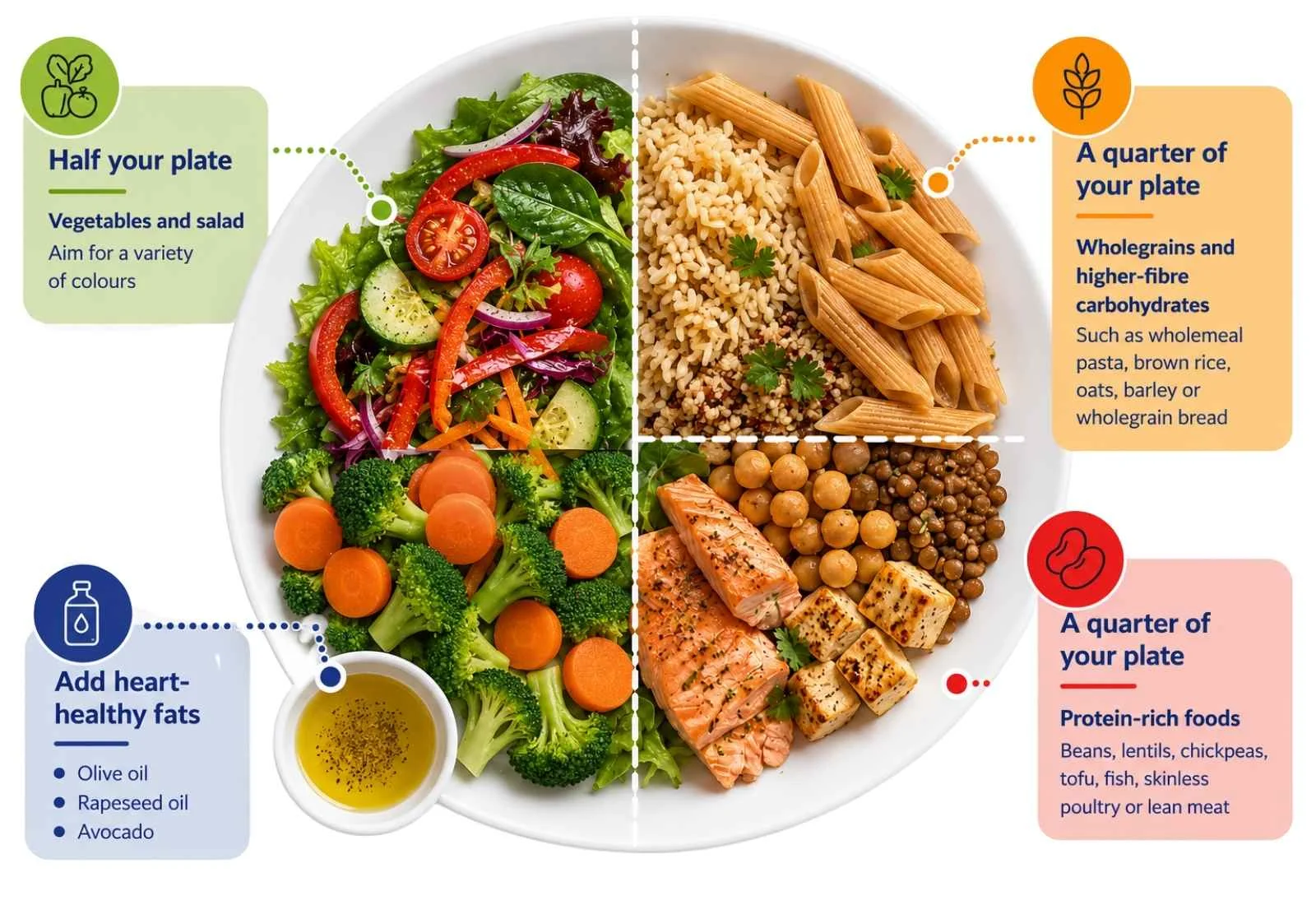
A simple way to build heart-healthy, balanced meals.
Aim to fill your plate with a variety of foods that provide fibre, vitamins, minerals and healthier fats.
Make it happen every day
Cholesterol SMART® Living is HEART UK's recipe and meal planning service designed to help you put Cholesterol SMART® principles into practice through everyday eating.
No. Cholesterol SMART® focuses on making practical, sustainable changes that fit into your lifestyle rather than following a restrictive diet.
Yes. It's your overall pattern of eating that matters most. Occasional treats can still be enjoyed as part of a balanced lifestyle.
Yes. Healthy eating and prescribed medication can work alongside each other to support cholesterol management and heart health.
Foods rich in soluble fibre, such as oats, barley, beans and lentils, together with replacing saturated fats with unsaturated fats, can help support healthy cholesterol levels.
Yes. Subscribers can access meal planning tools, recipe collections, shopping lists and practical resources to make healthy eating easier.
Absolutely. The recipes are designed to be enjoyable, practical and suitable for everyday family meals.
Everyone is different. Cholesterol levels can respond differently depending on a range of factors, including your starting point, the changes made and whether medication is also being used. Consistency is key.